Philippe Manoury is regarded as one of the most important French composers, in addition to being a researcher and forerunner in the field of live electronics. Despite in-depth training as a pianist and composer he was instructed by Max Deutsch (a student of Schoenberg’s) and Michel Philippot, among others—he considers himself to be self-taught. “The composition must be born from an inner longing, and requires no preconditions.” Accordingly, he began his first compositional experiments on his own in parallel to his first lessons in music, and, at the age of 19, his works were already being performed at major festivals for new music. His breakthrough culminated with the premiere of his piano piece Cryptophonos in 1974, interpreted by Claude Helffer.
Following two years of teaching at Brazilian universities, his compositional interest in mathematical models brought Philippe Manoury to the Paris Institut de Recherche et Coordination Acoustique/Musique (IRCAM). He worked there from 1981 together with the mathematician Miller Puckette on a programming language for interactive live electronics (very well-known today under the name MAX-MSP). Between 1987 and 1991, he composed Sonus ex machina, a cycle focusing on the real-time interaction between acoustic instruments and computer-generated sounds—a topic that continues to influence his artistic work and theoretical texts.
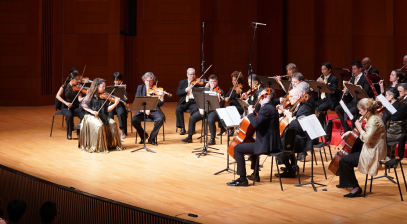
Alongside pieces for large orchestras such as Sound and Fury, the violin concerto Synapse (2009), and Echo-Daimónon for piano, electronics, and orchestra (2012), recent years have also seen the premieres of Philippe Manoury’s string quartets (Stringendo and Tensio, both 2010; Melencolia, 2013; Fragmenti, 2016) and instrumental works with electronics (Partita I for viola, 2007; Partita II for violin, 2012; Le temps, mode d’emploi for two pianos, 2014). The moment of interaction characterises his approach—not only in smaller works or compositions featuring electronics, but also with large orchestras: he turns them into a sound laboratory where new interactive possibilities are tested, expanding music theatre as a form.
This increasingly includes the spatial arrangement of musicians in the concert hall, for example in his work In situ, awarded the Orchestral Prize in Donaueschingen in 2013. Inspired by François-Xavier Roth, who conducted the premiere, Philippe Manoury extended the composition into the Köln Trilogie, a large-scale spatial triptych for the Gürzenich Orchestra Cologne. After Ring (2016) and a repeat performance of In situ (2017), the trilogy was completed with Lab.Oratorium for two singers, two actors, vocal ensemble, choir, orchestra, and electronics, staged by Nicolas Stemann and premiered in May 2019. The work folds texts by Ingeborg Bachmann, Hannah Arendt, and Georg Trakl into current events and was performed to wide acclaim in Cologne as well as at the Hamburg Elbphilharmonie and Philharmonie de Paris. The composer had already worked with director Nicolas Stemann on the music theatre work Kein Licht (No Light), based on the text of the same name by Elfriede Jelinek, which was shown in Strasbourg, Paris, Zagreb and Luxembourg after its premiere at the Ruhrtriennale 2017 and most recently at the Holland Festival in summer 2022. The world premiere of the Kein Licht Suite, written for the Lucilin Ensemble and mezzo-soprano Christina Daletska, followed in 2021 at the Philharmonie Luxembourg. The concerto for piano and ensemble Mouvements was premiered in the same year by Ancuza Aprodu and the Ensemble Orchestral Contemporain under Bruno Mantovani at the Messiaen Festival. In addition, Daniel Barenboim premiered Das wohlpräparierte Klavier, a large-scale work for piano and electronics, at the season opening of the Boulez Saal in Berlin.
In 2022, Philippe Manoury celebrated his 70th birthday, which was honoured with numerous concerts. Among the many events, the Paris Percussion Group performed Silex for twelve percussionists at the Auditorium de Radio France in May. Two premieres were on the programme of a concert at the Philharmonie de Paris with the Ensemble intercontemporain under François-Xavier Roth: in addition to the ensemble concerto Grammaires du sonore, together with mezzo-soprano Christina Daletska Vier Lieder (aus Kein Licht) as well as Fragments pour un portrait were performed. The 2023/24 season was marked by the completion of the orchestral triptych, whose opening work Anticipations had been premiered in autumn 2022 with the Orquestra Sinfónica do Porto Casa da Música under Baldur Brönnimann. The Austrian premiere of the work, which was co-commissioned by the Orchestre Philharmonique de Radio France, followed with the Tonkünstler Orchestra under Brad Lubman at the Grafenegg Festival, where Philippe Manoury was composer-in-residence. A second, shorter part of the triptych entitled Rémanences-Palimpseste was heard in December 2023 with the SWR Symphony Orchestra under Teodor Currentzis in Stuttgart and at the Philharmonie Berlin. The final work, Présences, was performed in August 2024 by the Tokyo Symphony Orchestra under Brad Lubman at the Suntory Hall Summer Festival, where Philippe Manoury was artist-in-residence; the work was co-commissioned by the Orchestre National de France
The current season is marked by a major opera premiere: Patrick Hahn, Philippe Manoury and Nicolas Stemann have developed a libretto based on Karl Kraus’ World War II tragedy Die letzten Tage der Menschheit (The Last Days of Mankind). The work can be seen at the Cologne Opera from the end of June. Before, a work for the Orchestre National de France, composed to mark the 100th anniversary of Pierre Boulez’s birth and inspired by his Notation VIII for piano, will be premiered in January 2025.
Philippe Manoury has held various teaching and artistic positions, including at Ensemble intercontemporain (1983-1987), Conservatoire de Lyon (1987-1997), Orchestre de Paris (1995-2001), Festival d’Aix-en-Provence (1998-2000), and the Scène nationale d’Orléans (2001-2003). He is professor emeritus of the University of California San Diego where he taught composition from 2004 to 2012. In 2013, he returned to his native France where he was named Professor of Composition at the Académie Supérieure de la Haute École des Arts du Rhin in Strasbourg. His own academy for young composers took place from 2015 to 2018 as part of the Musica Festival in Strasbourg. Following an invitation from the Collège de France, in 2017 he was also a given the “Chaire Annuelle de Création Artistique”. In the 2022/23 season he was a jury member of the Luciano Berio International Composition at the Accademia di Santa Cecilia.
Philippe Manoury has received numerous awards for his work. In 2014, he was named Officier des Arts et des Lettres by the French Ministry of Culture. Philippe Manoury is a member of the honorary committee of the French-German Fund for Contemporary Music/Impuls Neue Musik. In summer 2015, he was elected as a member of the Berlin Akademie der Künste.
Philippe Manoury’s works are published by Universal/Editions Durand. A collection of texts by and about the composer can be found on his blog at www.philippemanoury.com.